Structural Drying in North Caldwell
The puddle can disappear before the building is dry. Structural drying focuses on retained materials, using access, airflow and moisture measurements to determine what still needs attention behind the visible room surfaces.
(888) 471-9821Discuss materials that remain wet- Material moisture tracking
- Controlled indoor conditions
- Documented drying handoff
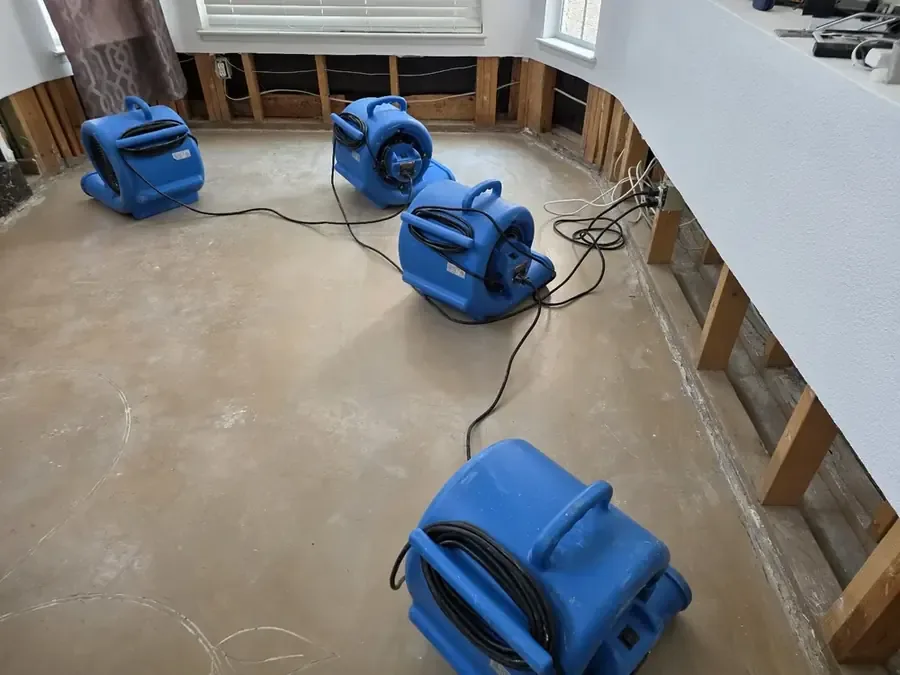
First steps for structural drying
- Confirm that water entry is controlled. Share the source repair status and any recent return of water. Drying cannot be planned effectively around a release that continues to wet the same materials during equipment operation.
- Identify retained wet materials. Describe opened walls, affected floor layers and any areas still closed after cleanup. These details help focus the assessment on the assemblies that need measurements and practical drying access.
- Plan household access around equipment. Explain occupied rooms, necessary passageways and power concerns before placement. Keep cords and equipment clear of routine traffic, and coordinate any changes with the person managing the drying arrangement.
- Keep the measurement points accessible. Avoid covering wet edges with storage or replacing removed trim while readings continue. The assessment needs consistent access to the affected materials before the final repair handoff is made.
How structural drying is handled
Establish the initial material condition
The assessment records the water source status, cleanup completed and materials intended for retention. Readings identify the wet boundary and useful comparison areas. Construction details and available access determine where equipment can work and which concealed areas may need to be opened.
Arrange airflow and moisture control
Equipment is selected and placed for the affected assembly and indoor conditions. The arrangement accounts for safe power, room use and access to measurement points. Any protective or restricted areas are explained so household activity does not obstruct the planned drying environment.
Measure progress and adjust access
Follow-up readings show whether retained materials are responding. Equipment placement, humidity management or selective openings may change when a layer remains wet. The record should connect those adjustments to the findings and identify any source issue that could be adding moisture again.
What does structural drying cost in North Caldwell, NJ?
Structural drying costs in North Caldwell depend on the retained materials, access and equipment arrangement needed to change their moisture condition. The planning ranges distinguish accessible assemblies from concealed or dense materials. Removal, source repair and reconstruction should be clearly separated when outside the drying scope.
For a closer planning number, run the water damage cost calculator. The restoration contractor who responds sets the real scope after the walkthrough and the moisture map.
Structural Drying restoration sequence
- 01
Establish the initial material condition
The assessment records the water source status, cleanup completed and materials intended for retention. Readings identify the wet boundary and useful comparison areas. Construction details and available access determine where equipment can work and which concealed areas may need to be opened.
- 02
Arrange airflow and moisture control
Equipment is selected and placed for the affected assembly and indoor conditions. The arrangement accounts for safe power, room use and access to measurement points. Any protective or restricted areas are explained so household activity does not obstruct the planned drying environment.
- 03
Measure progress and adjust access
Follow-up readings show whether retained materials are responding. Equipment placement, humidity management or selective openings may change when a layer remains wet. The record should connect those adjustments to the findings and identify any source issue that could be adding moisture again.
- 04
Document the reconstruction handoff
The final assessment records the condition of retained materials and outstanding repair tasks. Replacement finishes should follow that information and any product-specific installation requirements. A clear handoff explains why equipment can be removed and what the next contractor still needs to address before closing the assembly.
Drying is a material problem as well as a room-air problem. Framing, floor layers and wall bottoms can hold moisture after extraction has removed visible water. The useful question is which retained materials remain wet and whether the current access and equipment arrangement can reach them effectively.
Set the plan inside the actual building
North Caldwell describes hilly, wooded roads. Indoors, the drying arrangement depends on the affected assembly, room conditions and source status. A property reached from Courtier Road needs the same building-specific measurements as one near Mountain Avenue Field or Gould Avenue.
Available power, occupied rooms and narrow paths affect equipment placement. The plan should keep cords and airflow equipment organized while preserving access to measurement points. Moving a machine for convenience can change the arrangement, so household access needs should be discussed before placement is finalized.
Reach the layers that retain moisture
A closed finish can limit drying of the material beneath it. Selective access may be needed at trim, wall openings or floor transitions. The reason for each opening should be connected to the moisture finding and the retained layer it helps expose.
- Record initial readings at the affected materials and relevant comparison areas.
- Identify equipment locations and any room restrictions during operation.
- Recheck persistent wet spots instead of relying on surface appearance.
- Explain additional access when a concealed layer stops making progress.
Use a clear stopping decision
The end of drying should follow documented material conditions and the intended repair, rather than a calendar assumption. Equipment may need adjustment as one assembly improves while another remains wet. Any renewed water entry requires a source check.
For an affected wood finish, hardwood floor restoration adds product and stability considerations. The final handoff should state what was measured and what remains to repair, giving the next contractor useful information before insulation, wallboard or flooring closes the assembly.
Safety planning starts with Ready.gov flood precautions; household water-use checks appear at EPA WaterSense.
Related water damage services in North Caldwell
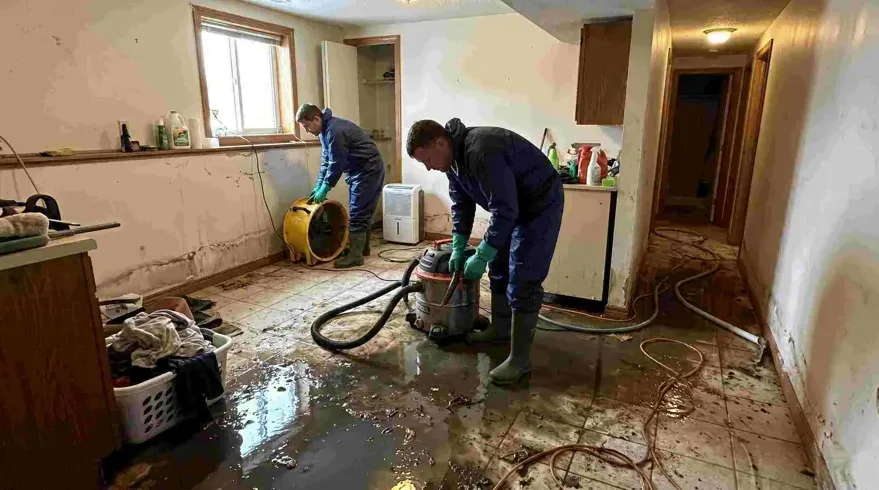 Water Extraction in North CaldwellExtraction removes liquid water before dehumidifiers manage the moisture left in materials. Crews choose pumps, wands and vacuum tools around water depth, contamination and the surfaces that need protection.
 Hardwood Floor Water Damage in North CaldwellHardwood restoration evaluates moisture across the floor assembly, including board surfaces, backing and subfloor access. Salvage depends on contamination, attachment, distortion and whether the affected layers can dry without leaving concealed moisture.
Structural Drying in CaldwellStructural drying removes retained moisture from salvageable building materials after source control and extraction. Air movement, dehumidification and temperature management work together, with repeated measurements showing whether the affected assembly is responding.
Structural drying in North Caldwell, NJ
North Caldwell drying assessments cover properties around Courtier Road, Mountain Avenue Field and Gould Avenue, with the wet materials, opened areas and equipment access needs described during planning.
The same service nearby: structural drying in Caldwell, Totowa, Woodland Park.
Water damage restoration in North Caldwell · every town coveredStructural Drying questions
How is drying different from water extraction?
Extraction recovers accessible liquid from surfaces and suitable materials. Drying addresses moisture that remains within the building assembly afterward. The scope should distinguish the two tasks and explain which retained layers need equipment, access and measurements once the visible water is gone.
Can a room feel dry while framing stays wet?
Material readings add detail beyond room comfort and the appearance of visible surfaces. Enclosed framing or underlayment can hold moisture after the room looks improved. Material readings and access checks help determine whether the assembly is ready for closure or needs further drying work.
Why are readings taken more than once?
Repeated readings show the direction of change and identify areas that remain wet. They help connect equipment adjustments to material progress. The record also supports a clearer stopping decision than a single observation made when the equipment was first placed in the room.
Can equipment be turned off overnight?
Changes to equipment operation should be coordinated with the drying contact. The arrangement depends on controlled conditions and the affected materials. Noise, access or power concerns should be discussed so a workable plan is established without interrupting progress through unplanned changes.
Does every wet wall need to be opened?
Access decisions depend on construction, water condition and material response. Some areas may be assessed through existing access, while others need selective openings. The scope should explain the purpose of an opening and identify the retained layer that needs attention behind it.
What happens if a material stops improving?
Persistent moisture calls for assessment of access, equipment conditions and possible renewed water entry. The drying plan may need adjustment or further opening. The reason should be documented so the homeowner understands how the next action addresses the specific area that remains wet.
When can reconstruction start after drying?
Reconstruction should follow source control and assessment of the retained assembly. The handoff needs material findings and any outstanding tasks, while the installer checks requirements for replacement products. New finishes should not close areas still awaiting moisture assessment or necessary repair access.
Know what supports the stopping decision
The final record should connect material readings with the next repair step before new finishes cover the areas that needed drying.
(888) 471-9821Discuss the drying measurement planCaldwell Water Damage Restoration
Caldwell, NJ and nearby Essex County
(888) 471-9821 · open 24/7
Water and sewage losses only
Find us on Google