Ceiling Leak Water Damage in Caldwell, NJ
A dripping ceiling may hold water above the visible mark. The restoration team protects the room below, identifies the wet assembly and coordinates source repair before measured drying. Emergency dispatch operates 24/7.
(888) 471-9821Get overhead wetting assessed- Overhead hazard checks
- Insulation and cavity access
- Documented drying targets
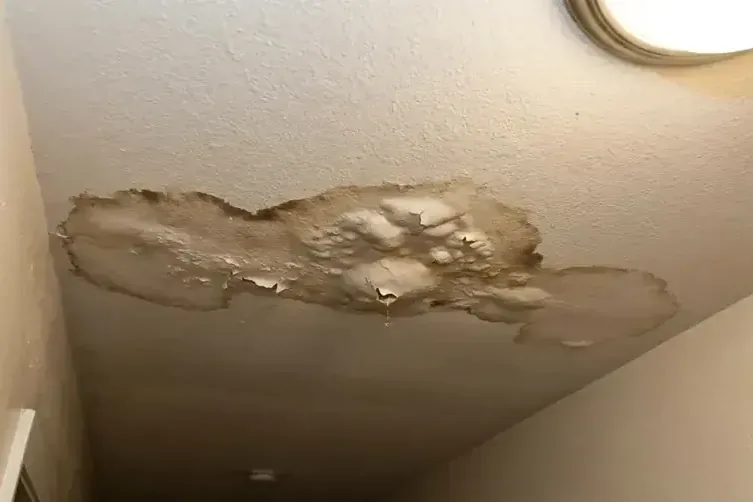
First steps for ceiling leak water damage
- Leave the fall zone. Keep everyone away from a bulging or sagging ceiling. Do not puncture the surface or place a ladder under wet material to investigate the cavity.
- Stop a safe indoor source. If an accessible fixture or supply valve controls the leak, close it without entering a hazard. Avoid operating wet switches, lights or nearby appliances.
- Protect the record. Photograph the stain from a safe location and note whether it changes during fixture use or rain. That timing helps the source assessment without proving a cause.
- Arrange upper access. Identify the room above and any restrictions on entering it. The contractor needs to assess the full assembly rather than only the ceiling face visible below.
How ceiling leak water damage is handled
Establish safe access
The crew examines sagging, fixtures and the room below before setting the work area. Electrical concerns and overhead instability take priority over moving equipment into position. The protected area extends beneath the section where loose material could fall unexpectedly. Room protection remains in place while the overhead assembly is assessed.
Locate the wet assembly
Technicians inspect the upper space and trace moisture across the ceiling. The source repair plan distinguishes a fixture discharge from rain entry or a concealed supply failure. Findings from both levels remain together so the repair addresses the complete water route.
Remove unstable finishes
The contractor documents and removes materials that cannot safely remain. The opening exposes the cavity for cleaning, insulation decisions and a drying arrangement suited to the assembly. The contractor checks the exposed edges for additional wetting before fixing the removal boundary.
What does ceiling leak water damage cost in Caldwell, NJ?
Ceiling leak water damage mitigation commonly ranges from $900 to $5,500. Source repair, new finishes and painting may be separate. Ceiling height, insulation saturation, cavity access and the amount of unstable material determine the drying and removal scope.
For a closer planning number, run the water damage cost calculator. The restoration contractor who responds sets the real scope after the walkthrough and the moisture map.
Ceiling Leak Water Damage restoration sequence
- 01
Establish safe access
The crew examines sagging, fixtures and the room below before setting the work area. Electrical concerns and overhead instability take priority over moving equipment into position. The protected area extends beneath the section where loose material could fall unexpectedly. Room protection remains in place while the overhead assembly is assessed.
- 02
Locate the wet assembly
Technicians inspect the upper space and trace moisture across the ceiling. The source repair plan distinguishes a fixture discharge from rain entry or a concealed supply failure. Findings from both levels remain together so the repair addresses the complete water route.
- 03
Remove unstable finishes
The contractor documents and removes materials that cannot safely remain. The opening exposes the cavity for cleaning, insulation decisions and a drying arrangement suited to the assembly. The contractor checks the exposed edges for additional wetting before fixing the removal boundary.
- 04
Confirm readiness to close
The drying team logs framing and finish readings and checks for renewed wetting. Rebuilding starts after the source stays controlled and the concealed layers reach their target. The final cavity check is documented before replacement panels conceal the framing from view.
A stain marks where water becomes visible, not necessarily where it entered. Water can follow joists, pipes and sheet seams before dripping into the room. The assessment considers that route while keeping occupants away from a weakened ceiling.
Protect the room below before opening
For a Bloomfield Avenue property, the contractor checks whether the affected space can remain occupied and how to protect the route through it. Sagging panels, falling plaster and wet fixtures change the access plan. An opening should be controlled by the crew, not created by a homeowner standing beneath a bulge.
Keep furniture and valuables out of the fall zone when a safe approach exists. The team documents the ceiling condition before removal and coordinates power isolation where the release has reached lights or wiring.
Investigate above and beside the visible mark
At a Brookside Avenue home, a bathroom leak can wet the floor above and ceiling below without leaving a large puddle upstairs. Technicians inspect both sides of that assembly. Supply repairs, drain corrections and waterproofing work are separate source tasks with different tests.
- Check the room above for an active fixture or supply discharge.
- Inspect insulation that can conceal water against the framing.
- Follow stains along seams rather than assuming a straight vertical path.
- Photograph removed finishes and record the cavity condition.
- Keep access open until the source remains controlled and the materials dry.
Dry the cavity before restoring the finish
A public water-service repair on Espy Road does not identify the cause of an indoor ceiling stain. The source diagnosis comes from the building inspection. Once that source is controlled, the drying technician checks framing and surrounding finishes against unaffected material.
Ceiling paint can hide an unfinished dry-out. The crew records material readings and inspects the upper assembly before patching. Saturated insulation, weakened gypsum or separated plaster may require replacement rather than surface drying. Burst-pipe cleanup covers a pressure-fed source; roof-leak restoration follows rain entry through the building envelope. Keep those source paths distinct when describing the loss and reviewing the repair scope.
Safety planning starts with Ready.gov flood precautions; household water-use checks appear at EPA WaterSense.
Related water damage services
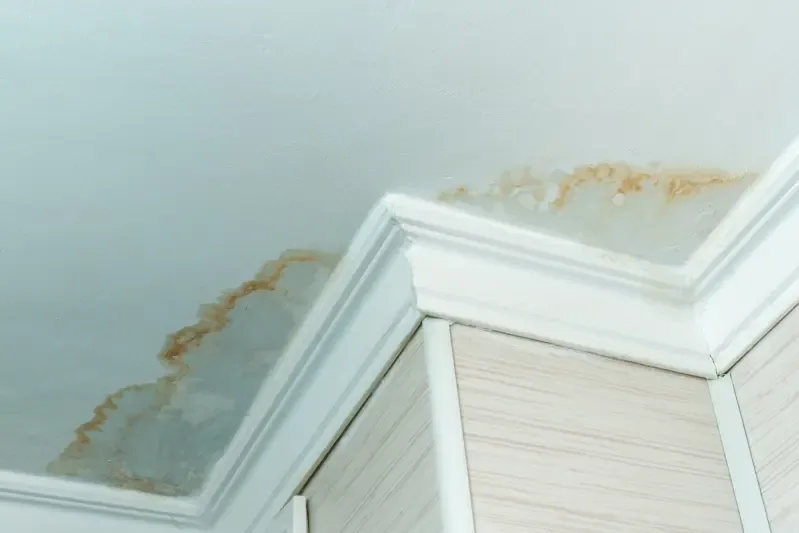 Roof Leak Water DamageRoof-leak restoration treats the interior water damage beneath a failed roof detail. Roofing work controls rain entry; the mitigation scope checks decking, insulation, framing and room finishes that have absorbed water.
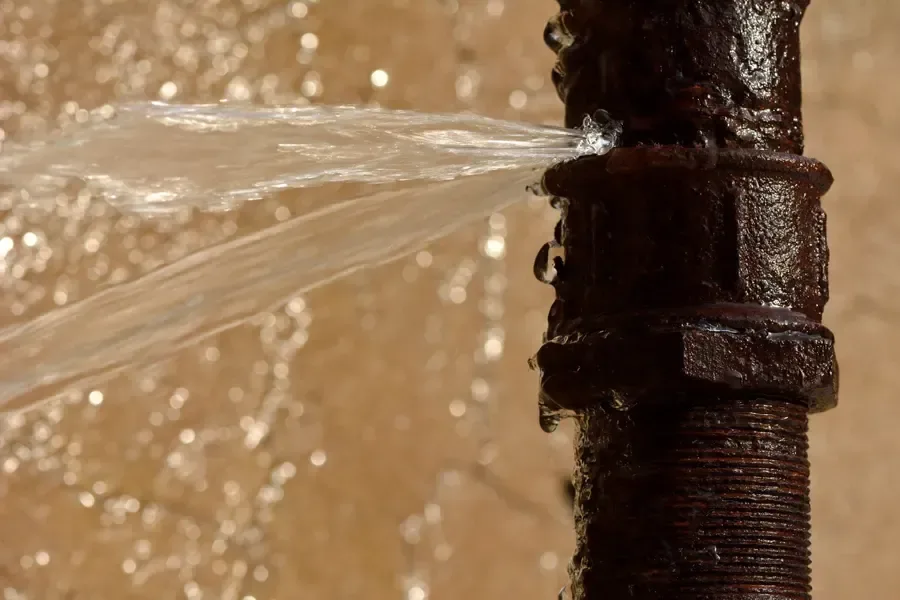 Burst Pipe Water DamageBurst-pipe cleanup follows pressurized water through cavities, floor openings and room edges. A plumber repairs the damaged pipe while restoration technicians remove escaped water and establish a drying plan for connected materials.
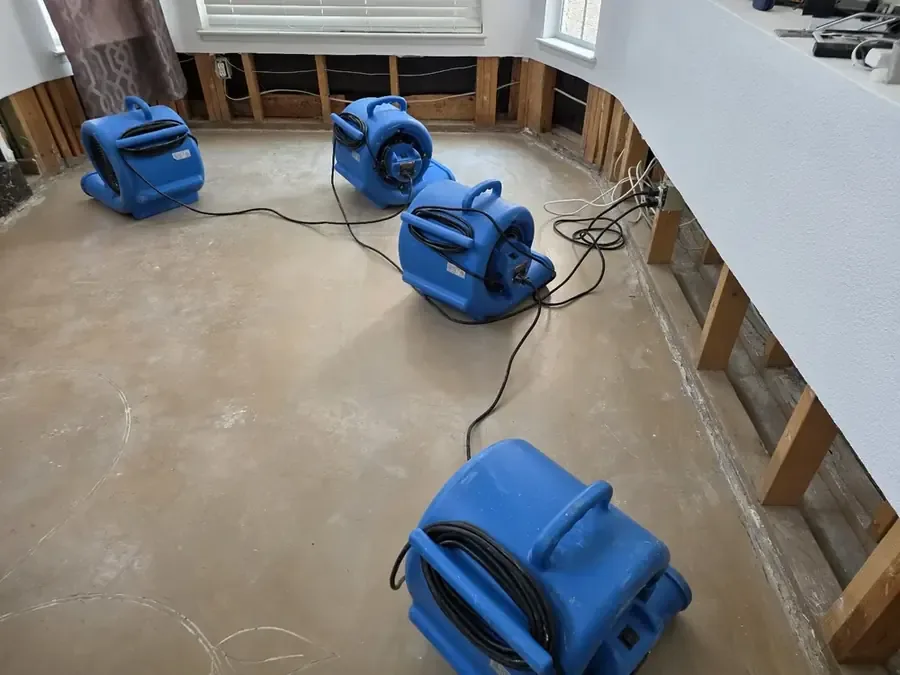 Structural DryingStructural drying removes retained moisture from salvageable building materials after source control and extraction. Air movement, dehumidification and temperature management work together, with repeated measurements showing whether the affected assembly is responding.
Ceiling leak water damage in Caldwell, NJ
Coverage includes Bloomfield Avenue, Espy Road and Brookside Avenue, with ZIP codes 07006 and 07007. Describe the entry route and affected rooms when requesting a walkthrough.
See the coverage detailsCeiling Leak Water Damage questions
Should a swollen ceiling be punctured?
Keep clear of it. A bulge can release water and heavy material unexpectedly, and wiring may be nearby. The contractor assesses the overhead hazard and creates controlled access with appropriate protection rather than asking an occupant to drain it.
Can the source be away from the stain?
Yes. Water follows framing, seams and penetrations before it appears below. The inspection checks the upper room and neighboring cavity sections. A repair at the visible drip point alone can miss the source that continues feeding the assembly.
Is paint enough after the ceiling dries?
Paint addresses appearance, not structural condition or concealed moisture. The team checks the finish, insulation and framing first. Damaged panels or separated plaster need repair, and the replacement finish should wait until the source and drying work are complete.
Do wet light fittings change the cleanup?
Yes. Electrical equipment creates an access hazard that requires appropriate isolation and assessment. Do not touch a wet switch or fixture. The restoration crew coordinates safe entry before working around the affected ceiling and documents the areas requiring specialist attention.
Can insulation remain above the ceiling?
That depends on its material, saturation, contamination and drying access. Wet insulation can hold moisture against other layers or lose its intended performance. The contractor inspects the cavity and explains why particular sections can remain or need replacement.
How is drying checked overhead?
Technicians compare affected framing and finishes with suitable dry reference areas and monitor the trend. Material measurements reveal moisture within each accessible layer. Follow-up inspections verify the assembly before patching.
What information helps an urgent request?
Describe the size and change in the stain, any sagging, nearby electrical fixtures and the room above. Mention whether dripping follows rain or appliance use. Emergency dispatch operates 24/7, and the contractor uses these details to plan safe assessment.
Check the full ceiling assembly
The contractor coordinates source control, careful opening and recorded drying so the next finish covers a ready structure. Urgent dispatch operates 24/7.
(888) 471-9821Start the overhead moisture assessmentCaldwell Water Damage Restoration
Caldwell, NJ and nearby Essex County
(888) 471-9821 · open 24/7
Water and sewage losses only
Find us on Google