Roof Leak Water Damage in Totowa
Rain can stop while an overhead assembly continues releasing water into the room below. Roof leak cleanup in Totowa examines that delayed movement and coordinates interior drying with repair of the opening that admitted the rain.
(888) 471-9821Talk through rain entry damage- Roof repair coordination
- Interior moisture tracing
- Attic material assessment
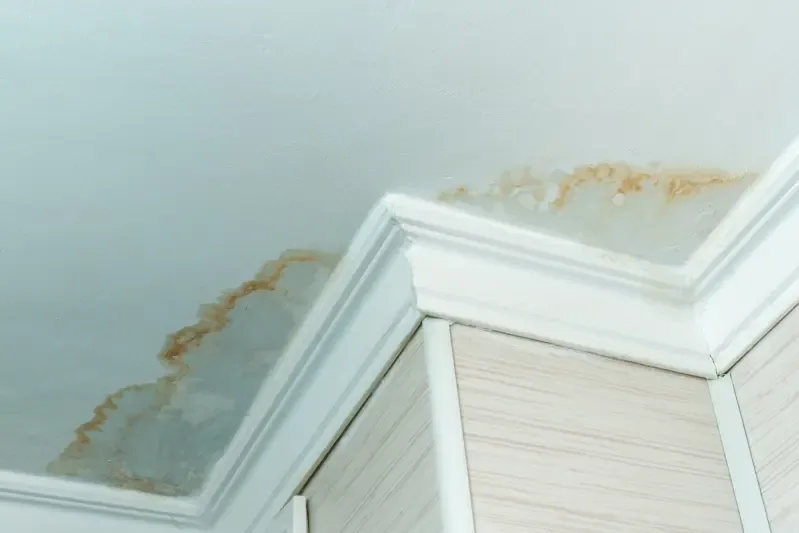
First steps for roof leak water damage
- Remain below safe access points. Wet roofs and unstable overhead areas require appropriate professional access. The owner can describe indoor symptoms from a dry location instead of climbing to inspect the rain entry personally.
- Clear the room beneath wet finishes. Sagging ceilings and drips near fixtures need a protected area. Belongings should only be moved when the route avoids unstable materials and electrical hazards around the affected room.
- Record the relationship to rain. Note when dripping started, whether it continued after rain stopped and where stains appeared next. Those observations help connect the exterior opening with the interior water path during assessment.
- Coordinate exterior and interior scopes. The repair plan should identify who controls roof entry and how cleanup reaches wet materials below it. Closing finishes should wait until source control and retained material condition are assessed.
How roof leak water damage is handled
Link the outdoor entry with indoor findings
The assessment records the rain related symptoms and coordinates with the roofing repair. Interior access conditions are considered before entering overhead spaces. The resulting scope identifies the receiving rooms and the likely concealed route, including places where water may remain between the repaired opening and the visible stain.
Reveal the wet interior materials
Controlled access allows damaged finishes and insulation to be assessed without relying solely on the visible ceiling mark. Unsuitable material is removed as needed, and retained framing becomes accessible for treatment. Contents and dry passageways are protected while work proceeds through the affected overhead and wall sections.
Respond to material readings
Drying equipment is arranged around the exposed assembly, with measurements used to track remaining moisture. The setup accounts for wet junctions and surfaces previously covered by insulation. Continued dampness prompts a check for inadequate access or further entry rather than an assumption that every roof repair has finished the interior work.
What does roof leak water damage cost in Totowa, NJ?
Roof leak water damage cleanup in Totowa has planning examples from $1,000 to $6,500+. Interior spread, attic access and wet insulation affect the cost. Roof repair and replacement decoration need separate identification alongside the proposed extraction and drying work.
For a closer planning number, run the water damage cost calculator. The restoration contractor who responds sets the real scope after the walkthrough and the moisture map.
Roof Leak Water Damage restoration sequence
- 01
Link the outdoor entry with indoor findings
The assessment records the rain related symptoms and coordinates with the roofing repair. Interior access conditions are considered before entering overhead spaces. The resulting scope identifies the receiving rooms and the likely concealed route, including places where water may remain between the repaired opening and the visible stain.
- 02
Reveal the wet interior materials
Controlled access allows damaged finishes and insulation to be assessed without relying solely on the visible ceiling mark. Unsuitable material is removed as needed, and retained framing becomes accessible for treatment. Contents and dry passageways are protected while work proceeds through the affected overhead and wall sections.
- 03
Respond to material readings
Drying equipment is arranged around the exposed assembly, with measurements used to track remaining moisture. The setup accounts for wet junctions and surfaces previously covered by insulation. Continued dampness prompts a check for inadequate access or further entry rather than an assumption that every roof repair has finished the interior work.
- 04
Connect drying with the reconstruction plan
The closing record identifies the affected layers, moisture findings and remaining finish replacement. It also notes how source control was coordinated. The owner can then discuss reconstruction with a clear boundary, avoiding a ceiling repair that conceals damp material or leaves an adjoining wall section outside the proposed work.
A drip after rain may be the final part of a longer route through the building. Water can follow a framing member, collect above a ceiling and appear beside a wall well away from the entry point. Interior cleanup needs to account for that route while the roof opening receives appropriate repair.
Keep exterior work separate from interior access
A property owner should not climb onto a wet roof or enter an unsafe overhead space to find the opening. Roofing work and interior damage assessment have different access requirements. The cleanup scope should state how ongoing entry will be controlled before retained materials are expected to dry.
Totowa emergency notifications include critical community alerts for residents and businesses. Properties near Union Boulevard, Washington Park School or U.S. Route 46 can use those notices for community instructions while reporting the actual rain entry and indoor damage at their own building.
Investigate the space between entry and stain
Insulation can hide the wet surface beneath it. A ceiling can also release stored water after outdoor conditions improve. Inspection follows accessible roof framing and interior junctions, identifying materials that need removal and those that can remain with adequate drying access and monitoring.
- Compare the first interior stain with later drips or wall changes.
- Record which overhead spaces can be reached without unsafe climbing.
- Inspect wet insulation and the surfaces it has been touching.
- Protect the room below while controlled access exposes damaged layers.
Rebuild only after the interior scope is understood
The Building Department states that most property improvements require permits. The planned repairs can be discussed there, including the relationship between exterior work and interior replacement. A clear scope avoids treating a roof patch as completion of every resulting water damage task.
When the ceiling remains wet, overhead damage cleanup addresses the receiving assembly. The final record should connect the controlled rain entry with drying findings and the finishes still needing replacement, so the property has a coherent repair sequence.
Safety planning starts with Ready.gov flood precautions; household water-use checks appear at EPA WaterSense.
Related water damage services in Totowa
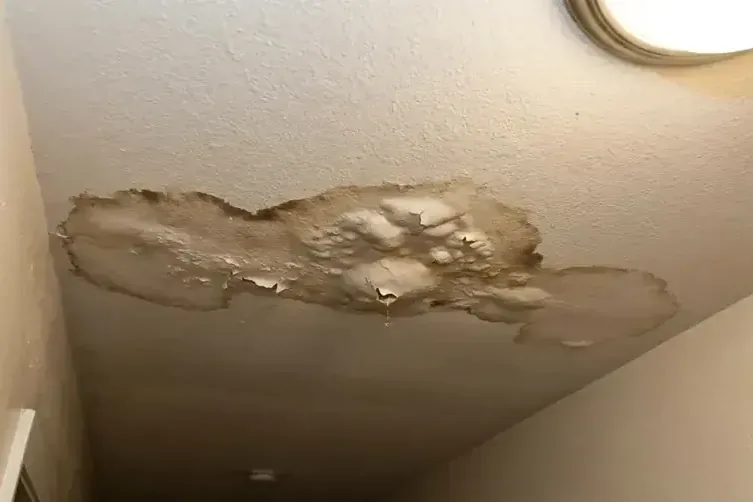 Ceiling Leak Water Damage in TotowaCeiling cleanup addresses wet drywall, insulation and framing after an overhead release. The source may sit in a bathroom, supply pipe or another space above the stain, so inspection follows the water path.
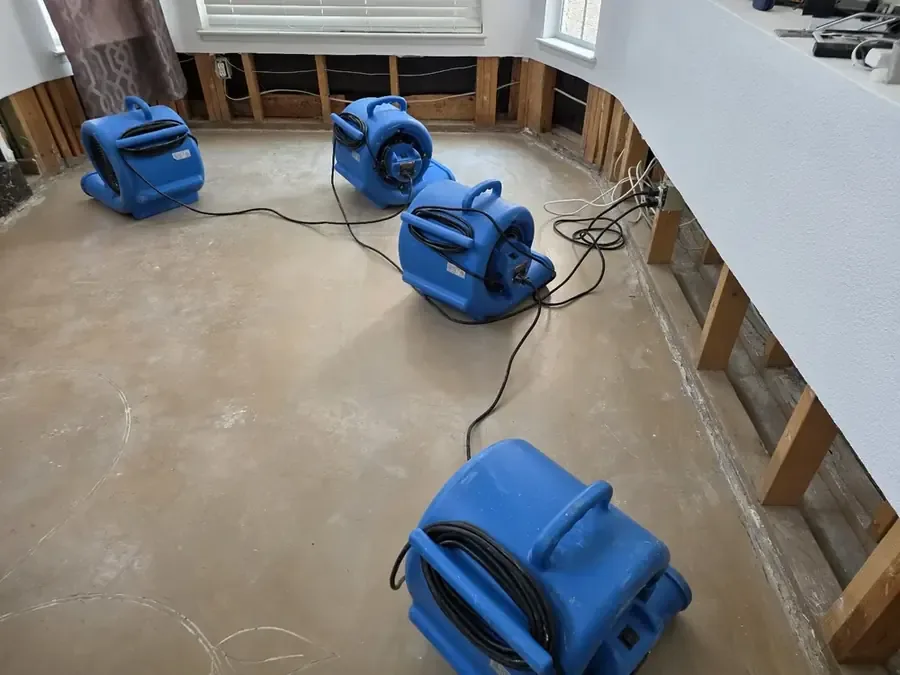 Structural Drying in TotowaStructural drying removes retained moisture from salvageable building materials after source control and extraction. Air movement, dehumidification and temperature management work together, with repeated measurements showing whether the affected assembly is responding.
Roof Leak Water Damage in CaldwellRoof-leak restoration treats the interior water damage beneath a failed roof detail. Roofing work controls rain entry; the mitigation scope checks decking, insulation, framing and room finishes that have absorbed water.
Roof leak water damage in Totowa, NJ
For properties around U.S. Route 46, Union Boulevard and Washington Park School, the initial roof leak conversation can identify interior access and the rooms showing rain related changes.
The same service nearby: roof leak water damage in Caldwell, Woodland Park, North Caldwell.
Water damage restoration in Totowa · every town coveredRoof Leak Water Damage questions
Can a roof repair solve the interior damage too?
The repair stops or limits new entry, while cleanup addresses water already inside the building. Insulation, framing and finishes may remain wet after the opening is repaired. Both scopes should be connected so the next interior work follows actual material conditions rather than outdoor weather alone.
Why does dripping continue after the rain ends?
Water can collect in overhead materials and drain slowly toward a lower opening. Continued dripping therefore needs inspection of the retained water path as well as the exterior repair. The timing helps the assessment, but it cannot replace examination of the affected assembly.
Is the visible stain enough to price cleanup?
A stain gives only part of the picture. Access above it, wet insulation and water extending into a wall can change the work considerably. An estimate should state what has been inspected and explain any concealed conditions that still need access before the scope is complete.
Should an owner inspect the attic personally?
Entry depends on safe footing, electrical conditions and the stability of the surrounding materials. A wet or unfamiliar overhead space can be hazardous. Describing symptoms from a safe location is useful; the assessment can determine how the affected area should be reached and inspected.
Can dry looking insulation remain in place?
The visible face may not show moisture against framing or behind a ceiling surface. Its condition and suitability for retention need assessment at the affected layer. The cleanup plan should explain whether insulation can remain or must be removed to address the assembly beneath it.
What local notices matter during severe weather?
Borough emergency notifications include critical community alerts for residents and businesses. Those notices can inform access and immediate safety decisions. The cleanup conversation should separately describe the property's actual roof entry, affected rooms and any ongoing indoor water movement that requires attention.
When can the damaged room be decorated?
Decoration follows source control and assessment of the retained assembly. Material readings, finish condition and the repair scope should support that transition. Painting before those decisions can conceal a wet surface and make it harder to follow the damage path if staining returns later.
Follow the water below the roof opening
A coordinated cleanup plan identifies wet layers and practical access, then establishes what needs drying before the interior repair work closes the assembly again.
(888) 471-9821Discuss the interior rain pathCaldwell Water Damage Restoration
Caldwell, NJ and nearby Essex County
(888) 471-9821 · open 24/7
Water and sewage losses only
Find us on Google