North Caldwell Commercial Water Damage
A business water loss changes access as well as the room itself. Cleanup planning should identify the responsible building contact, affected operations and a protected equipment route before removal and drying work begins.
(888) 471-9821Discuss the business cleanup route- Building contact coordination
- Occupied area separation
- Documented material decisions
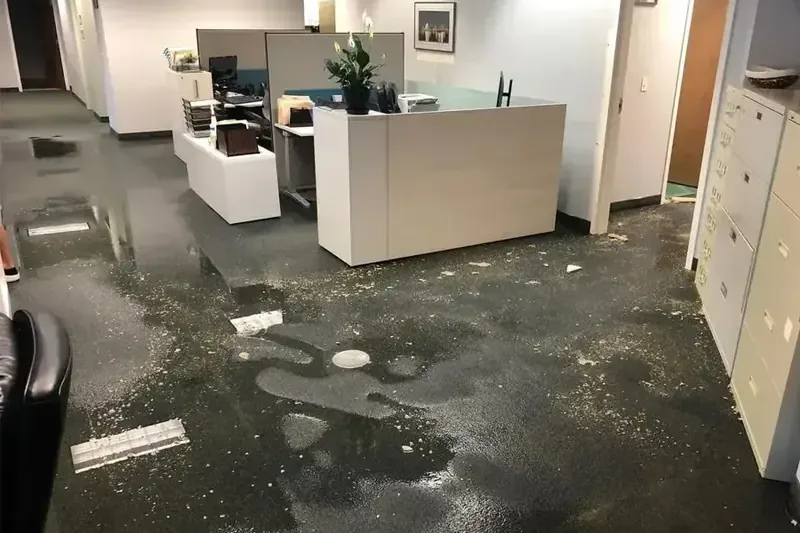
First steps for commercial water damage
- Identify an authorized building contact. Provide the person responsible for access and work decisions, including any separate property manager. Clarify which rooms and shared finishes require coordination before inspection, opening or equipment placement can proceed.
- Restrict affected work areas. Keep staff and visitors outside wet rooms and routes with unsafe utilities or loose finishes. Preserve a dry approach for the assessment without moving affected stock through occupied business areas.
- Document business contents. Photograph furnishings, stock and equipment from a safe position. Identify items needing specialist handling so their assessment is coordinated with water removal and access to the building materials behind them.
- Explain operating and entrance needs. Describe occupied spaces, necessary passageways and suitable equipment entrances. Those details help shape a cleanup route that accounts for the building's current use and the scope of restricted rooms.
How commercial water damage is handled
Establish authority, source and access
The assessment identifies the responsible building contacts and the current source repair status. Safe entry and any shared-area permissions are established before work begins. Affected rooms, utilities and business contents are recorded so the initial scope reflects both material damage and practical access constraints.
Set the room and route boundaries
Occupied areas are separated from removal and equipment paths. Contents handling is coordinated with access to wet walls and floors. The scope identifies the materials requiring removal or cleaning and explains any opening that affects shared construction or another party's controlled space.
Restore and monitor retained assemblies
Accessible water is removed, unsuitable materials are addressed and retained surfaces are cleaned as needed. Drying equipment then follows the actual assemblies, with readings used to track progress by area. Changes are documented for the building contact when concealed wetting expands the original scope.
What does commercial water damage cost in North Caldwell, NJ?
Commercial water damage costs in North Caldwell depend on affected zones, material layers, contamination and access coordination. These planning ranges distinguish a contained business room from a large loss. Contents specialists, source repairs and reconstruction should be identified separately when outside the restoration scope.
For a closer planning number, run the water damage cost calculator. The restoration contractor who responds sets the real scope after the walkthrough and the moisture map.
Commercial Water Damage restoration sequence
- 01
Establish authority, source and access
The assessment identifies the responsible building contacts and the current source repair status. Safe entry and any shared-area permissions are established before work begins. Affected rooms, utilities and business contents are recorded so the initial scope reflects both material damage and practical access constraints.
- 02
Set the room and route boundaries
Occupied areas are separated from removal and equipment paths. Contents handling is coordinated with access to wet walls and floors. The scope identifies the materials requiring removal or cleaning and explains any opening that affects shared construction or another party's controlled space.
- 03
Restore and monitor retained assemblies
Accessible water is removed, unsuitable materials are addressed and retained surfaces are cleaned as needed. Drying equipment then follows the actual assemblies, with readings used to track progress by area. Changes are documented for the building contact when concealed wetting expands the original scope.
- 04
Deliver a room-specific repair handoff
Completion notes identify retained material conditions, source repair status and outstanding reconstruction tasks for each area. Room-use decisions also consider utilities, equipment and access restrictions. This gives management a practical basis for coordinating repairs and operations as different portions of the premises move through restoration.
A wet business room can interrupt more than the activities inside it. Equipment routes, shared entrances and access to adjoining rooms all need coordination. The first restoration conversation should establish who can authorize work, which areas are occupied and what source repair is already underway.
Define the premises and its contacts
North Caldwell describes modest commercial activity at the northern and southern ends of the borough. A cleanup request should identify the actual premises and its access arrangements. East Greenbrook Road, Mountain Avenue and Gould Avenue can provide location context without replacing instructions for the correct building entrance.
The responsible contact should clarify tenant and building-management roles before openings or equipment placement affect shared construction. Useful information includes operating areas, stored stock, sensitive equipment and any restrictions on using the normal delivery or public entrance during cleanup.
Separate operations from the wet work area
Water condition and the affected assembly determine which rooms require restriction. A dry-looking corridor may still be needed as an equipment route or may connect to a wet floor layer. The work plan should identify protection and access needs before staff resume routine movement.
- Record affected furnishings and business contents before handling decisions.
- Identify rooms where utilities need qualified safety assessment.
- Keep occupied paths separate from hoses, cords and removed materials.
- Document permission before opening finishes controlled by another building contact.
Make repair decisions understandable by room
A room-based scope helps separate water removal, cleaning, drying and reconstruction. Each affected assembly should have a clear retention or removal decision. If additional wetting appears during access work, the responsible contact needs findings that explain the proposed change.
Structural drying can address retained materials after the source and cleaning work are handled. The final handoff should state which areas are ready for repair and which remain restricted. That gives the building team practical information for reopening decisions without relying solely on the disappearance of standing water.
Safety planning starts with Ready.gov flood precautions; household water-use checks appear at EPA WaterSense.
Related water damage services in North Caldwell
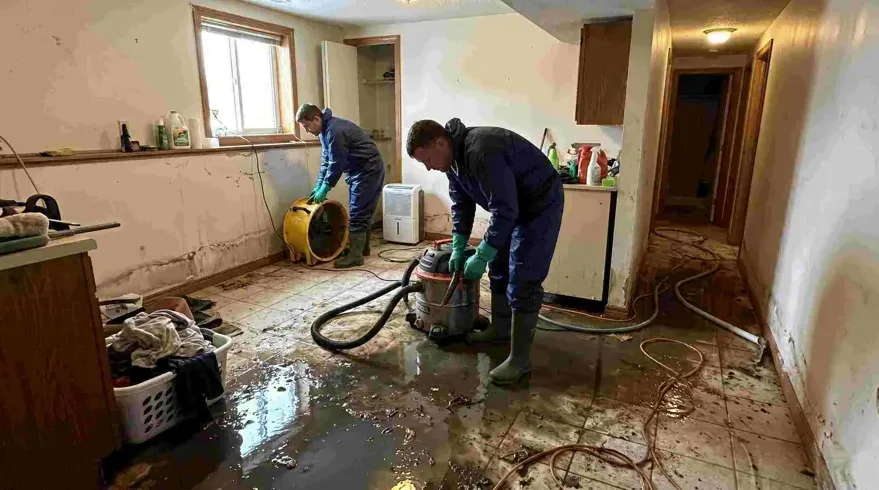 Water Extraction in North CaldwellExtraction removes liquid water before dehumidifiers manage the moisture left in materials. Crews choose pumps, wands and vacuum tools around water depth, contamination and the surfaces that need protection.
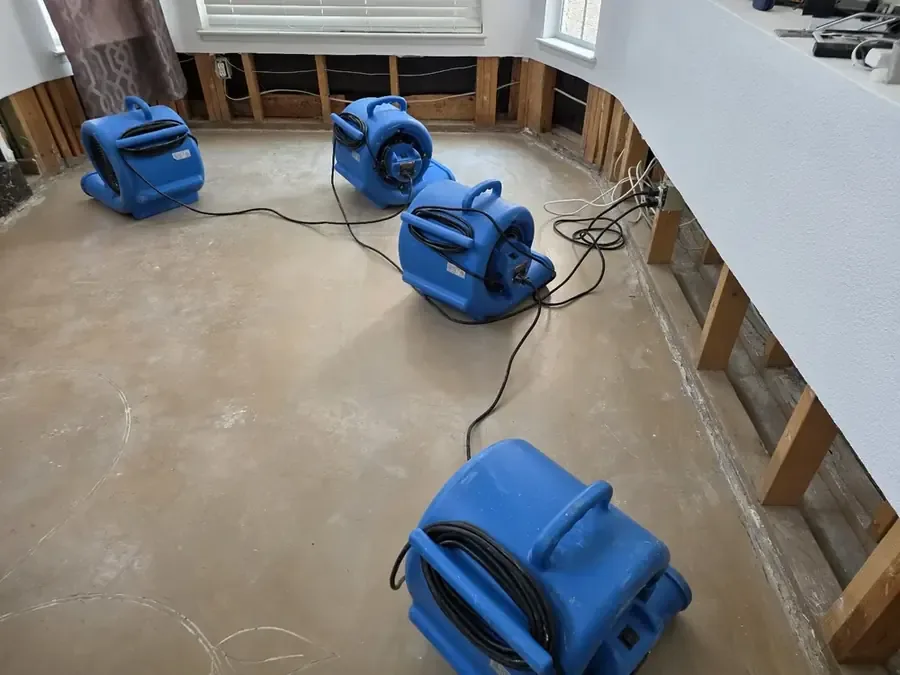 Structural Drying in North CaldwellStructural drying removes retained moisture from salvageable building materials after source control and extraction. Air movement, dehumidification and temperature management work together, with repeated measurements showing whether the affected assembly is responding.
Commercial Water Damage in CaldwellCommercial restoration combines extraction and material drying with access coordination. The contractor identifies wet zones, protects unaffected routes and records work by area so the building contact can understand what remains available and what needs restriction.
Commercial water damage in North Caldwell, NJ
North Caldwell commercial cleanup planning can use East Greenbrook Road, Mountain Avenue and Gould Avenue as location references, then establish the building contact, affected spaces and permitted equipment entrance.
The same service nearby: commercial water damage in Caldwell, Totowa, Woodland Park.
Water damage restoration in North Caldwell · every town coveredCommercial Water Damage questions
Who should authorize commercial cleanup work?
The responsible building or business contact should establish authority and access before work affects shared rooms or finishes. Tenant and property-management roles may differ. Clarifying those responsibilities helps the assessment proceed with the right permissions and keeps later scope changes understandable.
Can unaffected business areas remain occupied?
Occupancy depends on utilities, contamination, safe passage and the extent of work. The plan should identify occupied zones and keep equipment or debris routes separate where practical. A room outside the visible pool still needs checking if connected materials could be wet.
How are business contents handled?
Stock, furnishings and equipment need decisions based on exposure, material and specialist requirements. Photographs and an inventory help document the condition before movement. Contents handling should be coordinated with restoration so important items do not block drying access or carry water into clean rooms.
Does a small wet room mean a limited scope?
The visible room can connect to concealed walls, ceilings or floor layers in adjoining spaces. Access restrictions may also affect the work. The assessment should establish the actual wet boundary and the practical route before the extent of cleanup is settled.
What if another tenant controls the space above?
The building contact should arrange permission and coordinate inspection with that occupant. Water can travel through shared construction before becoming visible. The source investigation and material assessment need access to the relevant assembly, with responsibility for openings and repairs clarified in advance.
Can equipment be moved for normal operations?
Changes should be coordinated with the restoration contact because placement supports a particular drying arrangement. Operating needs are best discussed before setup. If access must change, the plan can be adjusted while preserving safe routes and measurements at the affected materials.
What supports reopening an affected room?
Room use depends on more than a dry-looking surface. Source control, utilities, contamination, material condition and remaining openings all matter. The handoff should describe those conditions and outstanding work so the responsible business contact can make an informed operational decision.
Give each affected area a clear next step
The restoration scope should identify restricted rooms, retained materials and repair handoffs so the building team can coordinate the return of normal operations.
(888) 471-9821Discuss the commercial room-by-room scopeCaldwell Water Damage Restoration
Caldwell, NJ and nearby Essex County
(888) 471-9821 · open 24/7
Water and sewage losses only
Find us on Google