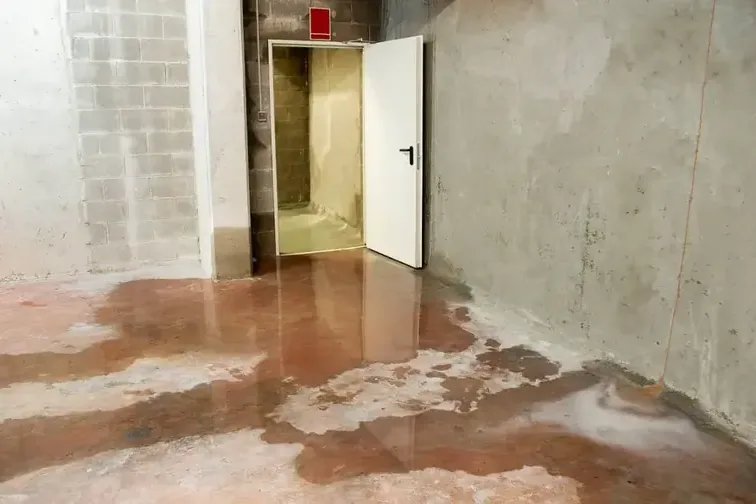
December 2023 and January 2024: back to back storms brought major flooding to Woodland Park. The municipal account described residents monitoring their homes and sump pumps. When basement water returns during cleanup, the restoration plan must track both incoming liquid and the moisture already held by walls, floors and stored contents.
Key takeaways
- Keep basement access restricted when electricity, structural conditions or water contamination remain unresolved.
- Record whether the water level is rising, falling or returning after removal.
- Have sump equipment and its power supply assessed without entering standing water.
- Track newly wetted materials separately from sections already being dried.
- Delay enclosure of a wet assembly until the inflow and material conditions are addressed.
Read the pattern of returning water
A basement that was pumped earlier may become wet again before the surrounding storm conditions have settled. The most useful observation is the change at a fixed location: water reaching a stair edge, spreading from a wall junction or reappearing beside a sump opening.
Photographs from the same safe viewpoint make that progression easier to understand.
The observer should also note what changed between views, such as rainfall continuing, pump operation changing or a doorway beginning to admit water. Those details help the restoration and source repair contacts organize an inspection.
An occupant should not enter standing water to obtain a closer picture or manipulate equipment that has become wet.
The basement flooding cleanup service needs that current pattern as well as the initial loss description. A plan for removing a settled pool differs from work in a room receiving continued inflow.
The crew can then coordinate extraction, access and monitoring around the actual condition instead of assuming the earlier pumping ended the event.
- Use the same dry viewing position for repeat photographs.
- Record visible changes at a stair, wall or fixed object.
- Note renewed inflow without opening electrical equipment.
- Tell the responding contact if an earlier dry area becomes wet.
Treat sump operation as a source control question
A sump pump may be operating while water remains elsewhere on the floor, or may need assessment because its operation has changed. The appropriate professional should examine the equipment, accessible discharge arrangement and safe power conditions.
A homeowner standing outside the wet area can describe sound or visible water movement without reaching into the sump.
The location of collected water matters. Liquid trapped behind stored contents or in another room may not reach the sump opening.
That part of the building needs its own inspection and extraction access. The crew should map the actual floor divisions and obstructions so a functioning pump does not become a reason to overlook isolated wet spaces.
A repair to the pump or its discharge addresses equipment performance. Building restoration still has to assess the materials that absorbed water before that repair.
Keeping those scopes separate allows the owner to see why the sump can be operating normally while wall bases, flooring layers or contents continue to require controlled cleanup and drying.
Keep access decisions tied to the current storm conditions
Slippery Rock Brook passes through the borough and drains part of the western flank of First Watchung Mountain. The Department of Public Works maintains culverts, catch basins and waterways to keep debris from interrupting flow.
During a household water loss, exterior observations and municipal notices can help the owner describe conditions to the responding contacts.
August 6, 2024: flooding closed Lackawanna Avenue, Andrews Drive and Memorial Drive. A current restoration appointment should follow current access information, particularly when water is still moving outdoors.
Equipment delivery and an occupant's return both depend on a usable route, so the property contact should communicate any restriction that changes before the crew arrives.
Inside the building, the route down to the affected level needs equal care. The bottom landing needs its own safety assessment even when the upper steps are dry.
Qualified assessment is needed where water may have reached electrical equipment or where building condition is uncertain, and occupants should wait outside the restricted area until safe access is established.
- Keep current public access notices with the incident notes.
- Identify an entrance that remains accessible to the crew.
- Avoid using a flooded roadway as a route to the property.
- Report wet electrical equipment before requesting basement entry.
Separate water removal from the next wetting cycle
The extraction record should describe which room was treated and what water remained or returned afterward. This is especially useful when a basement contains separate storage and finished areas.
A photograph of one cleared section should not become the completion record for a neighboring space that is still receiving water or cannot yet be reached.
Water extraction reduces accessible liquid, while material measurements track what remains absorbed. If water returns across a previously treated floor, the moisture map needs updating.
The technician should distinguish the new affected boundary from the earlier one so the owner can understand why the work scope or equipment arrangement changes.
Contents movement should follow the same distinction. Boxes taken from a newly wet section need assessment before entering a dry storage area, and a cart used in standing water should remain within controlled handling.
The goal is to prevent the repeated event from extending the loss into spaces that had stayed usable throughout the first cleanup.
- Label photographs by room and point in the incident sequence.
- Record a renewed release as a change in condition.
- Reassess the boundary where returning water reached stored items.
- Keep protected belongings away from extraction routes.
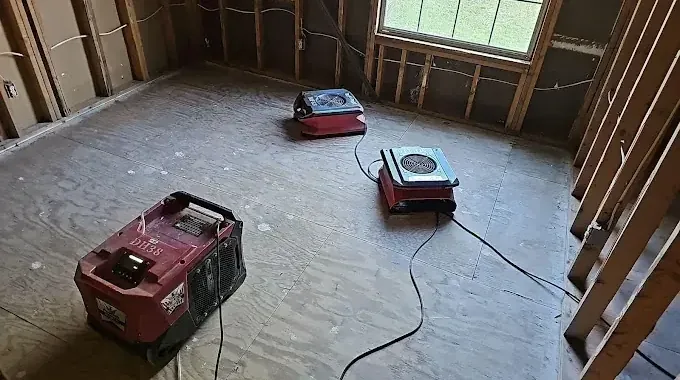
Inspect concealed basement finishes before closing the record
A finished basement can contain wall cavities, raised flooring and fixed storage that conceal wet surfaces. An unfinished space may have exposed assemblies but still contain blocked edges and inaccessible areas.
The technician should identify the actual construction and explain which parts can be assessed directly and which need purposeful access before drying can be evaluated.
Retaining a finish depends on its condition, water exposure and the ability to treat the wet layer behind it. A wall surface that feels firm can still cover damp backing, while a visible floor may conceal another layer.
Removal decisions should name the specific affected material and the reason access or replacement is needed.
The structural drying process should return to labeled points after the active water problem has been addressed. If those points stop improving, the crew can reassess continuing entry, restricted airflow or trapped material.
The response belongs in the project notes so the final condition is supported by a clear sequence of observations.
Leave a record useful for the next heavy rain
A completed restoration file should preserve the observed entry locations, the sump assessment and the final condition of retained assemblies. Future water at the same wall junction can then be compared with a documented earlier event.
This makes a later inspection more focused than a description that the basement has always seemed damp after rain.
Repair planning may involve a separate professional for drainage, plumbing or building work. The restoration handoff should show the surfaces opened and any areas that could not be assessed during mitigation.
The owner can provide that information to the next contact without treating the cleanup record as a design for permanent exterior drainage changes.
Before stored belongings return, the owner should understand which finishes remain incomplete and what access future work requires. Replacing boxes along an unfinished wall can hide the very location that still needs attention.
Clear photographs and an organized storage plan preserve visibility while the remaining repair work is coordinated.
- Keep pump findings separate from drying measurements.
- Identify repaired and unresolved water entry locations.
- Photograph walls before storage is placed against them.
- Retain any remaining access restriction with the repair scope.
Questions
Why can water return after the basement was pumped?
The incoming water condition may still be active, or another section may continue feeding the affected space. The responding professionals need updated observations to assess the source and adjust removal work.
Does an operating sump mean the basement is ready to use?
Room safety and material conditions still need assessment. Water away from the sump, wet electrical equipment and soaked finishes can require attention even while the pump is running.
Should stored boxes be moved upstairs immediately?
Wet contents need controlled assessment and handling before relocation. Taking them directly into clean rooms can spread water and contamination, so the cleanup team should establish a staging plan first.
What should be recorded during repeated flooding?
A sequence of views from a safe fixed location helps show the changing boundary. Include observed entry points, changes in pump operation and newly affected rooms without entering the water to investigate.
When is a finished wall ready to close?
The retained layers must be assessed and drying documented after the active entry problem is addressed. Any inaccessible or persistently wet section needs a clear decision before reconstruction covers it.