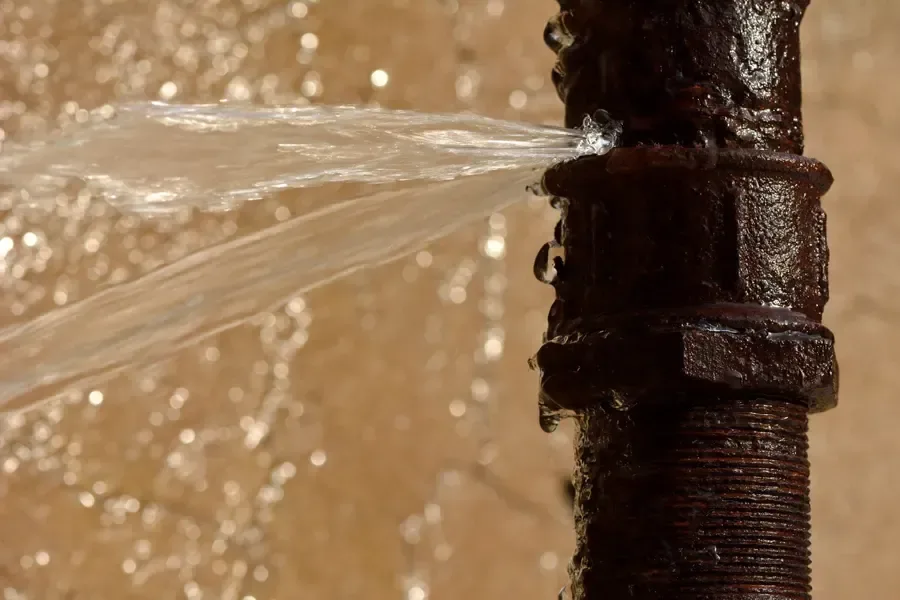
Lincoln Park's frozen pipe advice directs a property owner to shut off the main water supply after a pipe bursts and notes that the valve is often near the meter. Once that action can be taken safely, the next question is where the released water went. Plumbing repair and building restoration should follow the same observed path.
Key takeaways
- Locate the main shutoff only through safe, dry access.
- Arrange professional help when a frozen pipe cannot be located or thawed safely.
- Identify the rooms beside and below the failed pipe for inspection.
- Document the repaired component before its access opening is concealed.
- Use material measurements to decide when wall and floor repairs can proceed.
Make the shutoff reachable before handling the valve
The borough's description of a valve near the water meter gives an owner a practical place to identify during normal household preparation. During an active release, reaching that location may be complicated by stored contents, standing water or nearby electrical equipment.
Access safety takes priority over attempting to reach a familiar control through a newly hazardous room.
If the valve can be reached safely, the property contact should follow the borough's instruction to isolate the main supply after a burst. If access is unsafe or the control cannot be identified, appropriate professional help is needed.
An occupant should not search through water or manipulate unfamiliar electrical equipment in order to complete the shutoff.
The report to the responding plumber should state whether the supply was isolated and whether water is still escaping. Those details help distinguish a release that has stopped from one that remains active.
The burst pipe restoration process can then be organized around the source condition and the rooms already affected.
- Describe the meter and shutoff location when arranging help.
- Report any standing water between the entrance and the valve.
- Keep people away from wet powered equipment.
- Note whether the visible release changed after isolation.
Give the plumber a clear account of the failure
The useful history begins with what the occupant noticed: reduced flow at a fixture, a sound behind a wall or water emerging from a ceiling. Each observation should retain its order in the sequence.
A repair professional can use that account to plan access without relying on a guessed pipe material or an assumed failure location.
Lincoln Park recommends a plumber or another professional when a frozen pipe cannot be located or thawed safely. A hidden pipe should remain a professional access problem rather than an invitation to heat an unknown cavity.
The building also needs assessment for water already released, even when attention is focused on restoring supply to the affected fixture.
Once the damaged section is exposed, photographs should show the component in relation to nearby framing and finishes. The repair note should identify the work performed and any further inspection required before the supply returns to normal use.
That information helps the restoration crew understand the opening and separate active leakage from moisture retained in the surrounding assembly.
Trace the release downward and across room boundaries
A burst in a wall can send water to the floor below, into an adjoining partition or along a ceiling cavity before a puddle becomes visible. The inspection should follow the observed routes and include spaces beside and beneath the source.
The lowest visible wet spot may be the collection point rather than the place where the pipe failed.
A room sketch can mark the source opening, wet trim, floor transitions and ceiling stains. These locations help the technician return to the same material on later visits.
They also explain why a room outside the initial complaint may require access, especially when water has traveled through a concealed assembly before appearing in an occupied space.
The borough's sewer rate schedule recognizes several dwelling arrangements, including apartments and homes with office use. At any affected property, the contact arranging access should identify separately occupied rooms and the person who can authorize entry.
The actual water path may cross an occupancy boundary, making coordination important before inspection or equipment placement begins.
- Inspect the ceiling below an upper room release where accessible.
- Mark wet door trim and changes in floor finish.
- Record rooms requiring another occupant's access approval.
- Keep source photographs linked to the affected room sketch.
Remove liquid before asking equipment to dry the layers
Accessible standing water should be removed as part of a controlled restoration plan after safety and water condition are assessed. The water extraction service addresses that liquid, including pockets beside fixed objects where access allows.
Extraction gives the crew a clearer view of the flooring and wall edges that require further evaluation.
Floor coverings, cabinet bases and wall finishes can hide wet backing. The crew should identify the assembly and explain why a particular layer can remain or needs removal.
A finish that looks intact still needs sufficient access for assessment, while a damaged or unsuitable layer may need a different treatment from the material next to it.
Contents should be moved with their original location recorded. A wet box beneath the pipe opening and a dry cabinet across the room need different handling, and their photographs should preserve that distinction.
Organized staging keeps extraction routes clear while maintaining a useful record of belongings affected by the release.
- Identify water trapped beside fixed storage.
- Record the layers revealed when a finish is opened.
- Separate wet belongings from protected storage.
- Keep equipment routes clear of household circulation.
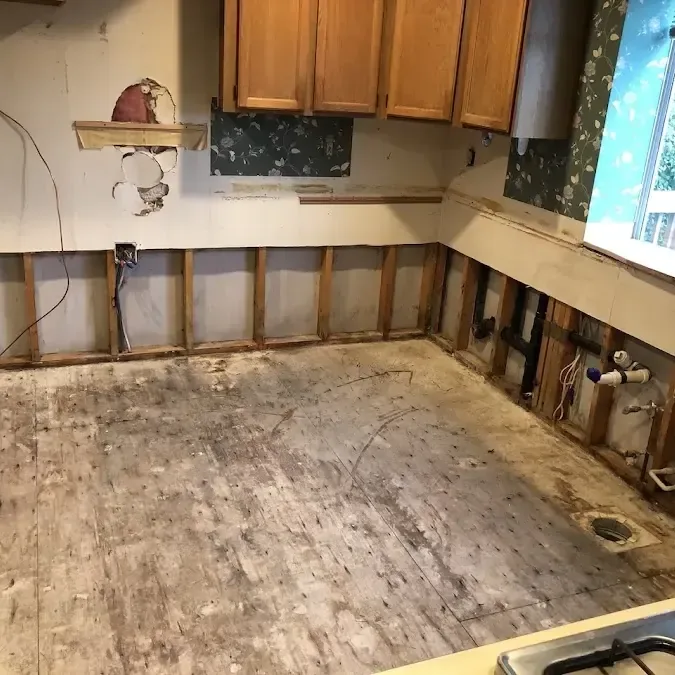
Use the repair opening to improve the drying plan
The opening made for pipe repair may reveal wet framing or insulation that was hidden during the first inspection. Those findings should be added to the moisture map immediately.
An access point intended for a small plumbing repair may need further assessment if the wetted assembly extends beyond what can be seen or treated through it.
Structural drying should identify the retained materials and follow their response at repeat locations. Room air conditions help interpret that response, but a comfortable room is not a substitute for material checks.
A wall cavity and a floor edge may progress differently because their exposure and construction differ.
When readings remain elevated, the technician should explain the next adjustment. That might involve checking for a continuing release, changing access or redirecting equipment toward the affected surface.
Recording the reason for each change makes the final handoff useful to a repair contractor who arrives after the pipework and drying equipment are already out of sight.
Close the project with a defined reconstruction scope
The borough requires construction permits for alterations, modifications and renovations to existing buildings, with applications describing the project scope. When a pipe loss leads to building repairs, the owner should present the actual planned work to the appropriate department.
A description of an opened wall and damaged floor is more useful than the broad phrase water damage.
Permitted construction receives inspections at specified points and a final inspection upon completion. The restoration record should therefore show what was opened, removed and retained before reconstruction proceeds.
Photographs of accessible assemblies can help the repair contractor understand the prepared space while arranging the inspections and work required for the particular project.
The household handoff should combine the source repair outcome, final moisture findings and any remaining finish work. It should also identify the main shutoff location for future preparation.
With those details retained, a later concern about the repaired room can be compared against an actual record rather than a memory of where the original leak appeared.
- Keep the plumbing repair description with the final drying notes.
- List wall, trim and floor repairs by location.
- Preserve photographs before reconstruction hides the assembly.
- Record the safely identified shutoff location for future access.
Questions
Where does the borough suggest looking for the main shutoff?
Its frozen pipe advice says the main valve is often near the water meter. Identifying it during ordinary conditions helps preparation, while an active water loss still requires a safe route to that location.
What if the frozen section cannot be found?
The borough recommends a plumber or another professional when locating or thawing the pipe cannot be done safely. The responding contact should receive the observed fixture symptoms and any visible wet locations.
Why inspect a room below the burst?
Released water can travel through the floor assembly before becoming visible on a lower ceiling. That room provides another view of the affected path and may contain materials requiring separate drying measurements.
Is the plumbing access hole enough for restoration?
Its usefulness depends on the extent of wet material it exposes. The crew may need further assessment or additional access if moisture continues into layers that remain concealed beyond the repair opening.
What documents help the reconstruction contractor?
A source repair note, room moisture map, photographs of exposed layers and an itemized remaining finish scope provide a practical starting point. Project specific permit and inspection questions can then be addressed against the actual planned work.