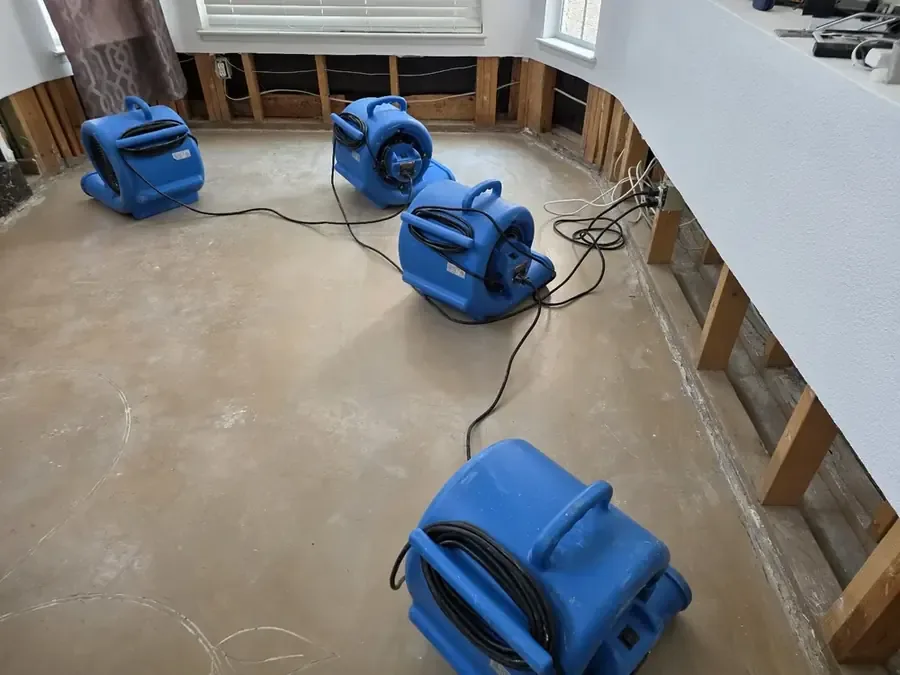
September 5, 2021: a Clifton update during Hurricane Ida cleanup asked residents to inventory damaged or lost contents. The same update described municipal assistance with flooded basement pumping. A useful household record connects those belongings to the rooms they occupied, while keeping the building's drying progress visible as a separate part of the restoration work.
Key takeaways
- Begin the contents record only from a location cleared for safe access.
- Photograph rooms broadly before documenting individual damaged belongings.
- Keep an item's original room and position attached to its assessment.
- Record removal decisions without losing sight of wet floors and wall bases.
- Match final material findings to the original affected room map.
Build the room record before sorting individual items
A wide room photograph can show shelving, furniture and the observed water boundary together. That context becomes difficult to recreate after belongings have been moved.
Once safe access is established, the household record should begin with those broad views, followed by closer images that identify damaged items and the surfaces they were touching.
The original location matters because a container on a raised shelf may have a different condition from a similar container resting on the floor. A general inventory category such as storage boxes loses that distinction.
Assigning a recognizable room and position to each group makes later sorting and repair questions easier to resolve.
The structural drying service needs a related but separate building map. The same room labels can connect a contents photograph to a wet wall or floor measurement without merging the records.
This gives the owner a clear way to follow both the belongings and the retained materials through the cleanup sequence.
- Photograph the whole room before safe relocation begins.
- Include shelves and floor contact points in the initial views.
- Use consistent room labels on contents and building records.
- Preserve photographs of water boundaries before extraction changes them.
Describe item condition instead of guessing replacement outcomes
An inventory entry should name the object and describe the observed contact with water. Useful wording identifies a saturated base, a wet container interior or a stained surface.
A photograph of a sealed box alone may show its outside condition, while the contents require a separate assessment before a disposition decision can be made.
The household contact should distinguish items approved for removal from items waiting for assessment. Discarding belongings without preserving their identity can leave gaps in the record, while keeping unsuitable wet materials in an occupied area can complicate cleanup.
The restoration team should establish the handling route and coordinate decisions with the responsible owner.
Receipts, product labels and earlier photographs can supplement the current condition images when available. They belong with the item entry rather than scattered through unrelated messages.
The purpose is to make the actual object and decision traceable, not to promise a particular replacement outcome or treat an entire room's contents as identical.
Keep flood access and power conditions in the sequence
The September 2021 city update described evacuations and PSE&G crews assisting with repairs and power shutdowns or restoration. Access to a flooded building therefore needs attention before documentation work begins.
A resident should wait for appropriate direction where water, electrical equipment or building conditions make entry unsafe, even when valuable contents remain inside.
A contents inventory can be started with existing photographs, receipts and a room list while physical entry is restricted. These preliminary notes can later be matched to safe condition observations.
That approach preserves useful information without encouraging a return to a wet basement merely to obtain an item label or inspect a storage shelf.
When access is allowed, the record should note which spaces were inspected and which remained unavailable. An inaccessible room should stay visible as a pending task rather than being counted as undamaged.
The project contact can then arrange the next assessment once the condition preventing entry has been addressed.
- Respect restrictions on entry to water affected rooms.
- Collect existing item records while physical access is unavailable.
- Mark rooms still awaiting inspection as pending.
- Keep the access sequence with the incident chronology.
Use contents movement to expose the wet building
Removing a cabinet, shelf unit or stack of boxes can reveal a wall base that was hidden during the first inspection. Those newly exposed surfaces need assessment before the cleared space is used for staging other belongings.
A tidy room can still contain wet backing or flooring that becomes visible only after the contents leave.
The water extraction process addresses accessible liquid around and beneath items where controlled access permits. The crew should then record the retained material condition before equipment placement or finish decisions.
This transition from contents handling to building treatment should be explicit so a previously concealed wet section becomes part of the drying plan.
Flooring changes and fixed storage edges deserve particular attention because they can divide the visible surface from another wet layer. A technician should explain which assembly is being measured and whether access is sufficient.
The owner can then understand why a cleared storage area may still require an opening, treatment or another measurement visit.
- Inspect wall bases as contents are removed.
- Photograph the footprint beneath relocated furniture.
- Add newly revealed wet locations to the moisture map.
- Keep dry storage out of areas still being assessed.
Make each drying visit answer a room specific question
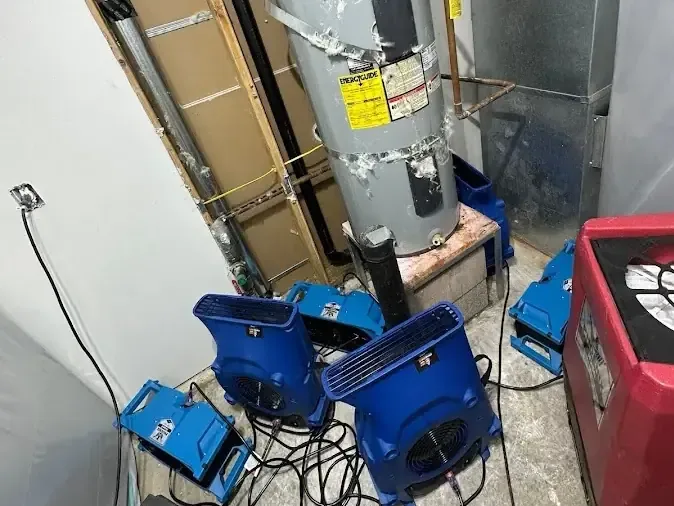
The drying log should identify the material, the measurement location and the condition being followed. A wall base behind removed shelving needs its own point, as does a floor section near a doorway.
Returning to those labeled points gives the crew a meaningful comparison with earlier visits and helps reveal sections that are responding differently.
Indoor air observations support the material record but should not replace it. The affected wall or floor is the part that will eventually be covered, repainted or loaded with belongings again.
If its readings remain elevated, the technician should investigate restricted access, renewed water or a slow concealed layer and document the resulting change in approach.
Basement flooding cleanup may involve both open concrete and finished rooms at the same property. Their completion decisions should remain specific to the materials involved.
One area reaching its drying endpoint does not close the record for a separate assembly that still requires treatment or an unresolved access decision.
Reconnect belongings and rooms at the final handoff
The final inventory should show where retained belongings were placed and what remains pending. The household can locate retained items through their storage labels, while the repair contractor can identify rooms still occupied by belongings.
Any specialist assessment or disposal decision should remain attached to the original item record.
The building handoff should pair final photographs with the initial room views and include the drying findings for retained assemblies. Remaining finish replacement belongs in a separate scope with the affected locations identified.
This keeps the difference between a dried room, a repaired room and a restocked room understandable during the return to ordinary use.
Before shelves or containers are returned, the owner should check whether they will cover an unfinished wall edge or obstruct planned repair access. A deliberate restocking arrangement helps preserve the completed work and the visibility needed for follow up.
The household record then remains useful after the equipment leaves, when different contractors may arrive to finish the project.
- Resolve or clearly retain pending contents decisions.
- Match final room views to the original photographs.
- Keep reconstruction tasks separate from drying completion.
- Record the storage destination of retained belongings.
Questions
Can an inventory begin before entry is safe?
Existing receipts, earlier photographs and a room list can be assembled without entering the affected area. Physical condition checks should wait until the relevant space can be accessed safely.
Should every wet box receive the same decision?
Each entry needs its own observed condition and assessment. The location, container construction and actual water contact can differ, so the record should preserve those details before disposition is decided.
Why keep wide room photographs after closeups are taken?
Broad views show where the objects stood and how the water boundary related to the building. That context helps connect later item decisions with newly exposed wall and floor conditions.
What if moving furniture reveals another wet section?
The technician should add that location to the building assessment and drying record. It may require treatment or access even if the surrounding open floor was already included in the original plan.
When can stored belongings return to the room?
The household contact should confirm the retained material outcome and any remaining repair restrictions. Belongings should be arranged so they do not conceal unfinished assemblies or prevent the access still needed for follow up work.