North Caldwell advises checking that tap water is clear before washing laundry after hydrant flushing. Water found on the laundry room floor requires a separate inspection of the appliance, its connections and the surrounding finishes. A flushing notice and a washer leak can be recorded together while each receives the attention its actual symptoms require.
Key takeaways
- Follow the borough's water clarity advice before restarting laundry after flushing.
- Stop using an appliance that is releasing water into the room.
- Keep hands and feet away from wet electrical connections.
- Inspect behind the washer and across adjoining floor transitions once access is safe.
- Restart normal laundry only after equipment safety and remaining building repairs are addressed.
Distinguish discolored tap water from an escaping appliance
Hydrant flushing can temporarily discolor tap water, and a September 2024 borough notice also warned of low pressure during flushing. Those are water service conditions to describe when contacting the appropriate department.
A puddle beneath a washer adds another observation: liquid has reached the room and the escape point needs identification.
The occupant can note whether the water appeared during filling, draining or while the machine was idle. That sequence helps an appliance or plumbing professional decide what to inspect.
Deliberately running another cycle to recreate the leak can add water to hidden flooring, so the existing observations and photographs are the better starting record.
The appliance leak cleanup service concerns the wet building materials around the machine. It can proceed alongside the source investigation once the space is safe.
The repair finding should name the actual failed connection or appliance component, while the restoration record describes where the released water traveled.
Create access without dragging equipment through water
A laundry appliance may block the view of its supply connections, drain arrangement and rear wall. Moving it requires attention to its weight, attachments and electrical condition.
An occupant should leave handling to an appropriate professional when the machine is surrounded by water or a connection could be pulled apart during movement.
Before safe relocation, photographs can show the machine's position and visible water at its sides. After relocation, new photographs should show the exposed floor and wall.
That sequence helps distinguish damage already present beneath the appliance from marks created during handling, and gives the repair contractor a useful picture of the original arrangement.
Storage should be considered separately from the washer. Detergent containers, baskets and cabinets may obstruct inspection along the wall base.
Items moved into a dry area should be checked for wet bottoms so the cleanup route does not carry water into an unaffected hallway or a room that will be used for temporary storage.
- Leave wet plugs, outlets and powered controls untouched.
- Photograph the appliance before and after professional movement.
- Check the feet and bases of stored items for moisture.
- Keep a clear route for equipment and later repair access.
Look beyond the outline of the washer
A small visible puddle can spread beneath a nearby cabinet or through a flooring seam. Inspection should include the appliance footprint, the adjoining wall base and the next floor transition.
Where a laundry room sits above another occupied space, the ceiling below also deserves attention if the observed water path points downward.
North Caldwell's land use is dominated by single family homes, and the borough also describes townhouse locations. Each affected dwelling still needs its own access plan.
A shared partition, enclosed laundry closet or upper floor installation changes the inspection route because the technician must reach the materials that actually received water.
Extraction removes accessible liquid before drying equipment takes over. The water extraction page explains that part of the work, which may include tight edges beside fixed storage.
A room sketch should identify any concealed section left for further assessment so it does not disappear from the scope once the open floor looks clear.
- Inspect the doorway threshold and adjacent hallway edge.
- Check cabinet toe spaces when water has reached them.
- Record any staining on the ceiling beneath the appliance room.
- Include trim and the wall behind the machine in the moisture map.
Make cabinet and floor decisions from their condition
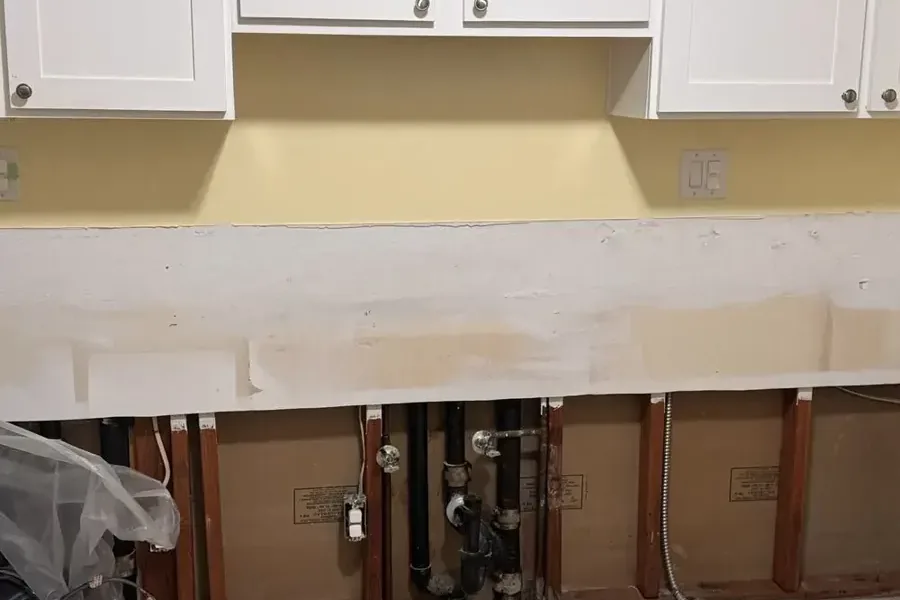
Cabinet bases can conceal the lowest portion of a wall and the floor beneath them. If those areas are wet, the crew needs a way to assess their condition and expose them to the chosen drying approach.
A removable access panel and a permanently fixed cabinet require different handling, so the construction should be identified first.
Floor layers also need to be understood before a finish is retained or removed. Water at a seam may reach material below the visible surface, while a raised edge may obstruct extraction.
The decision should account for attachment, deterioration, water condition and the ability to reach the wet layer rather than relying only on the appearance of the top finish.
Any removed trim or cabinet component should be identified by its original position. A photograph of the newly exposed backing helps explain the reason for access.
This detail matters when the appliance repair is complete but a separate contractor must still replace a floor section, reinstall storage or close the wall around the connection.
Dry the room with the appliance arrangement in mind
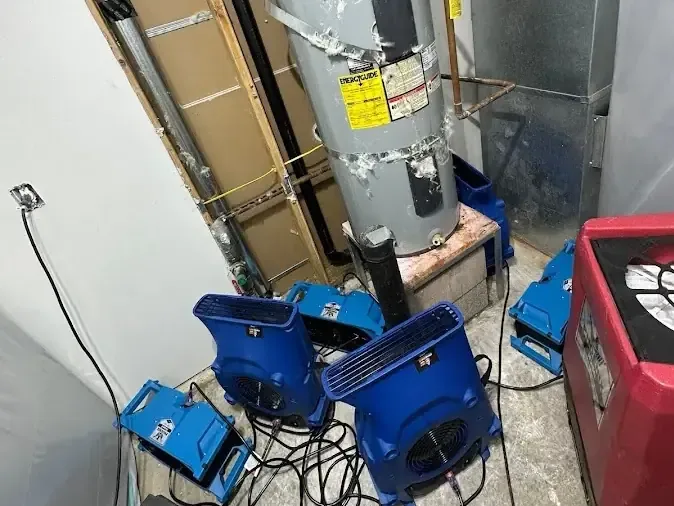
Once the source is controlled, the drying setup should reach the wall and floor surfaces that were hidden by the washer. Placing equipment only at the doorway may leave those surfaces poorly exposed.
The technician should explain which materials are being dried and how the equipment arrangement serves those particular locations.
Structural drying uses repeat material checks alongside room conditions. Measurements at the rear wall, cabinet edge and threshold can show different progress even within a compact laundry area.
A slow location may need an access adjustment or renewed source check, with the reason entered into the work notes.
Reinstalling the appliance too early can cover a surface still being monitored. The restoration and repair contacts should agree on the sequence for final readings, finish work and reconnection.
That coordination leaves a clearer endpoint than moving everything back as soon as the room air feels comfortable or the visible puddle has disappeared.
- Keep the original wet measurement locations identifiable.
- Note any area made inaccessible when equipment is moved.
- Coordinate drying checks before the washer returns to position.
- List floor or cabinet repairs that remain after mitigation.
Prepare for a controlled return to laundry use
The North Caldwell Water Department maintains the borough distribution system, while the Department of Public Works has authority over borough water matters. Questions about a flushing notice belong with the appropriate municipal contact.
Appliance operation and a leaking household connection need the professional responsible for that equipment or plumbing work.
The Building Department issues permits for construction, remodeling and structural repairs and lists plumbing and electrical officials. When the water loss leads to repair work, the owner can describe the proposed scope to the department.
The description should identify the actual work planned, such as opening a partition or repairing an affected electrical installation.
The household file should close with a source repair note, final material findings and any remaining work restrictions. A supervised equipment check can then follow the repair professional's instructions.
Keeping the borough notice with those documents preserves the sequence while making the appliance finding and the drying outcome easy to locate separately.
- Retain the flushing notice with its original date.
- Ask the repair professional about the next safe appliance check.
- Keep finish repair scope separate from appliance replacement decisions.
- Store final photographs before the laundry room is restocked.
Questions
Does brown tap water mean the washer has leaked?
Tap discoloration and water escaping onto the floor are different observations. The borough describes temporary discoloration during flushing; a wet laundry floor calls for inspection of the appliance and connections.
Should another wash cycle be used to locate the leak?
The machine should remain out of use while the release is investigated. The repair contact can use the recorded sequence and decide how to test equipment safely without adding uncontrolled water to the room.
Can the washer remain in place during drying?
Only if the wet materials can be assessed and treated adequately with it there. Restricted access behind or beneath the machine may require professional relocation before restoration continues.
Why check an adjoining hallway?
A floor joint or doorway can carry water beyond the laundry area. The technician checks that transition to establish the edge of the affected assembly and select repeat measurement points.
Who answers questions about repair permits?
The borough Building Department can address a proposed construction or repair scope. An owner should describe the work actually planned rather than assume the appliance issue determines every permit question.