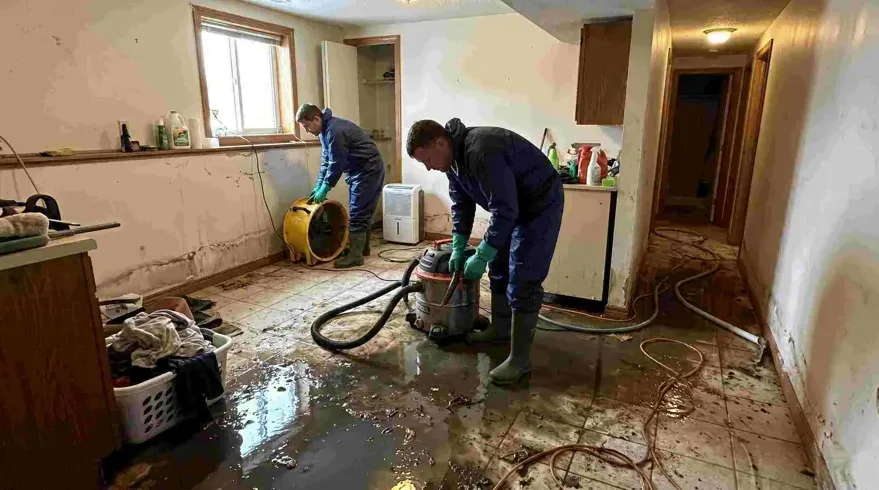
The Caldwell Water Department conducts service pipe investigations at meter connections. When water is visible near a meter, the building also needs a room inspection that follows the wet path away from that connection. Source repair, removal of standing water and drying of surrounding materials are related tasks with different completion points.
Key takeaways
- Describe where water first appeared before assigning a failed component.
- Arrange safe supply isolation and keep people away from wet electrical equipment.
- Trace the release beyond the meter enclosure into adjoining wall and floor edges.
- Keep the source repair report alongside the restoration moisture map.
- Confirm retained materials are ready before enclosing the repaired connection.
Start with a location description that can be checked
A report of water near the meter is a starting observation. The useful details include whether liquid is dripping from a visible fitting, collecting below pipework or arriving along the floor from another room.
A photograph taken from a safe, dry position can capture that relationship without requiring an occupant to handle the connection.
The contact arranging service should explain whether the water is still moving and whether a shutoff is accessible without entering the wet area. A valve hidden behind stored items may require a different access plan from a clearly visible control.
Wet electrical equipment or standing water around powered appliances requires qualified assessment before the room is approached.
The meter investigation and water extraction work should share the same starting location in their records. Naming the room and the observed connection makes later photographs easier to compare.
It also prevents a broad description such as plumbing leak from obscuring where the source work and building cleanup actually occurred.
- Record the first visible wet location and the direction of spread.
- Note whether water is actively dripping or only pooled.
- Describe blocked access without moving hazardous equipment.
- Keep original photographs even after the source has been repaired.
Separate a stopped release from a dry building
Once the water supply has been isolated or the failed part repaired, the room may stop accumulating new liquid. Materials already wetted still need assessment.
A low wall edge, floor joint or cabinet base can retain moisture after the visible source disappears, particularly where finishes conceal the backing or the next room's boundary.
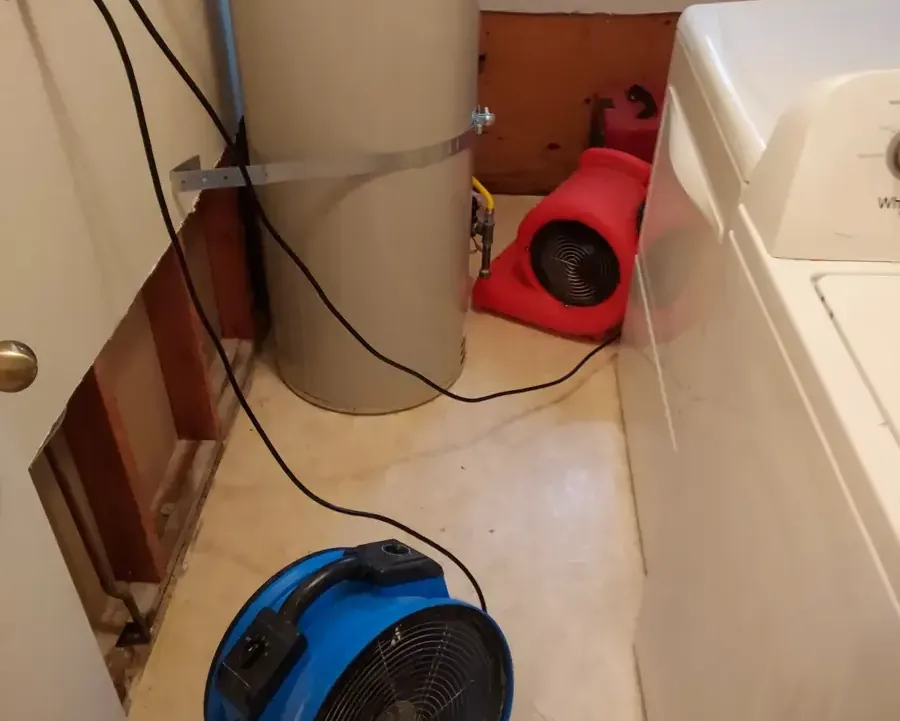
A repair technician's note should describe the work performed and any access openings left behind. The restoration crew can then plan around that opening and inspect the adjoining assembly.
A photograph of a new fitting is valuable for the source history, while a material reading beside it answers a different question about the building.
These records are easiest to use when each entry has its own purpose. The source report identifies the component and repair.
The extraction record identifies where liquid was removed. The drying log tracks retained surfaces and concealed areas that remain accessible, giving the owner a clear view of what is complete and what still needs attention.
Follow the floor through doorways and storage edges
Water can leave a utility space along a doorway, a small change in floor height or a joint beside a fixed object. Inspection should follow those routes into neighboring rooms rather than stopping at the original puddle.
The visible perimeter can shrink after extraction, so early photographs help preserve the extent first observed.
Stored cartons or fabric items can hide the lowest part of a wall. Safe contents movement allows inspection of the floor beneath and the backing behind them.
The location of each moved group should remain identifiable, especially if the room contains a mixture of dry belongings, wet packaging and items still awaiting a decision.
For a home near Brookside Avenue or elsewhere in the borough, the room layout determines the inspection route. The technician can mark thresholds, built in storage and changes in finish on a simple sketch.
That map gives repeat visits a consistent set of locations instead of depending on the memory of where a puddle had been.
- Check the opposite side of a wet partition where access allows.
- Inspect beneath safely movable storage containers.
- Include adjoining door trim and floor transitions.
- Label every measurement point by room and material.
Use an opening to answer a specific moisture question
A connection repair may expose a small section of wall while leaving surrounding insulation or framing concealed. The opening should be assessed for what it reveals and what remains inaccessible.
If the wet path continues beyond it, a separate access decision may be needed to inspect trapped material or make drying effective.
Opening more finish is a decision about the actual assembly, not a default response to every meter area leak. Attachment, material condition and the reach of moisture all matter.
The crew should explain the purpose of proposed access in ordinary terms, such as checking insulation behind a wet baseboard or exposing a floor edge under a cabinet.
The burst pipe cleanup page describes the broader work after a pipe release. The same distinction helps here: repairing pipework addresses the supply failure, while exposing a wet cavity addresses the building material.
Photographs taken as layers become visible can connect both parts of the project without blending their scopes.
Let readings determine the next equipment adjustment
After accessible liquid has been removed, the drying setup should match the surfaces that remain wet. Airflow needs a path to those materials, and moisture released into the room air needs removal.
Fixed storage, closed doors or a concealed cavity can affect that path even when the middle of the room feels comfortable.
Repeat readings belong at marked locations with the material and instrument approach identified. A trend at a wall base means more when it can be compared with the same point on a later visit.
If a section remains elevated, the crew should reassess access, continuing leakage and room conditions before treating the unchanged result as routine.
The structural drying process should produce a usable handoff for the repair contractor. That includes the retained materials assessed, the areas opened and the final condition at the original wet locations.
A repaired meter connection can then be enclosed as part of the remaining finish work once the surrounding assembly is ready.
- Keep equipment directed toward the identified wet surfaces.
- Record new leakage separately from previously absorbed moisture.
- Explain why a wall or floor point needs another visit.
- Preserve final readings before finishes conceal the access area.
Keep utility notices and the household loss record distinct
Espy Road experienced a temporary water service shutoff during borough repairs. A household receiving a utility notice should keep that notice with its date and service description.
If indoor water damage is also observed, the loss record needs its own photographs, source findings and affected room details so the sequence can be understood clearly.
A useful chronology states when an occupant noticed water, when access was arranged, what the repair technician found and when extraction began. Exact observations help the next contractor understand the work already completed.
Broad statements about an entire street are less useful than a clear description of the actual connection and material condition in the building.
The owner should retain the repair invoice, moisture map and final finish scope together. That collection supports later questions about a patch, cabinet opening or replacement floor section.
It also makes recurring wetness easier to investigate because the original source location and the materials previously treated remain visible in the record.
Questions
Does water beside a meter always come from that meter?
The source needs inspection at the building. Water may be observed below pipework or along an adjoining surface, so the report should describe its position until the failed component is identified.
Can flooring stay wet after the pipe is fixed?
Yes. Water absorbed by a floor assembly can remain after the supply release stops. Material checks and access to affected edges establish what drying work remains.
What information helps when arranging the inspection?
The room location, whether water is still moving and any blocked or unsafe access are useful details. A photograph from a dry position can show the relationship between the pipework and the wet floor.
Why keep the utility notice?
Its date and stated service work help establish the sequence of events. The household file should also contain the separate findings from the indoor source inspection and restoration work.
When should an opened wall be closed?
The repair team needs completed source work and documented drying of the surrounding retained assembly. Any unresolved wet section should remain accessible for assessment before finish reconstruction proceeds.